Economizer selection
Scourge of the Integral Economizer trend
An integral economizer can reduce the boiler package's initial cost and space requirements. But placing the heat exchanger inside the boiler exhaust enclosure can make routine inspection and tube repair more difficult, complicate service after a leak, and constrain future condensing recovery. Evaluate those lifetime limits before allowing first cost to decide the specification.
Design tradeoffs
Questions to ask before the purchase order.
| Consideration | Integral economizer | External economizer |
|---|---|---|
| Location | Built into the boiler's exhaust chamber or outlet. A compact package can simplify the initial layout. | Installed separately in the exhaust path. Requires space and duct connections, but can be positioned for access. |
| Inspection and service | Access depends on the boiler manufacturer's enclosure and service provisions. Work may involve the boiler itself. | Access doors and removable tube elements can be designed into the unit for inspection and replacement. |
| Water-side materials | Materials and tube construction are tied to the boiler maker's design. Confirm compatibility with actual feedwater quality. | Tube materials can be selected for the water conditions, including stainless steel where appropriate. |
| Heat recovery | Typically arranged for sensible heat recovery while protecting the boiler from condensation. | Can be configured for additional stages and condensing recovery when a suitable cold-water heat sink is available. |
| Condensate management | Any condensing operation must be compatible with the boiler's exhaust chamber and drain design. | Condensing stages can use a separate sump and gas path that keep condensate away from the boiler. |
The HeatSponge approach
Designed for access and a broader recovery range.
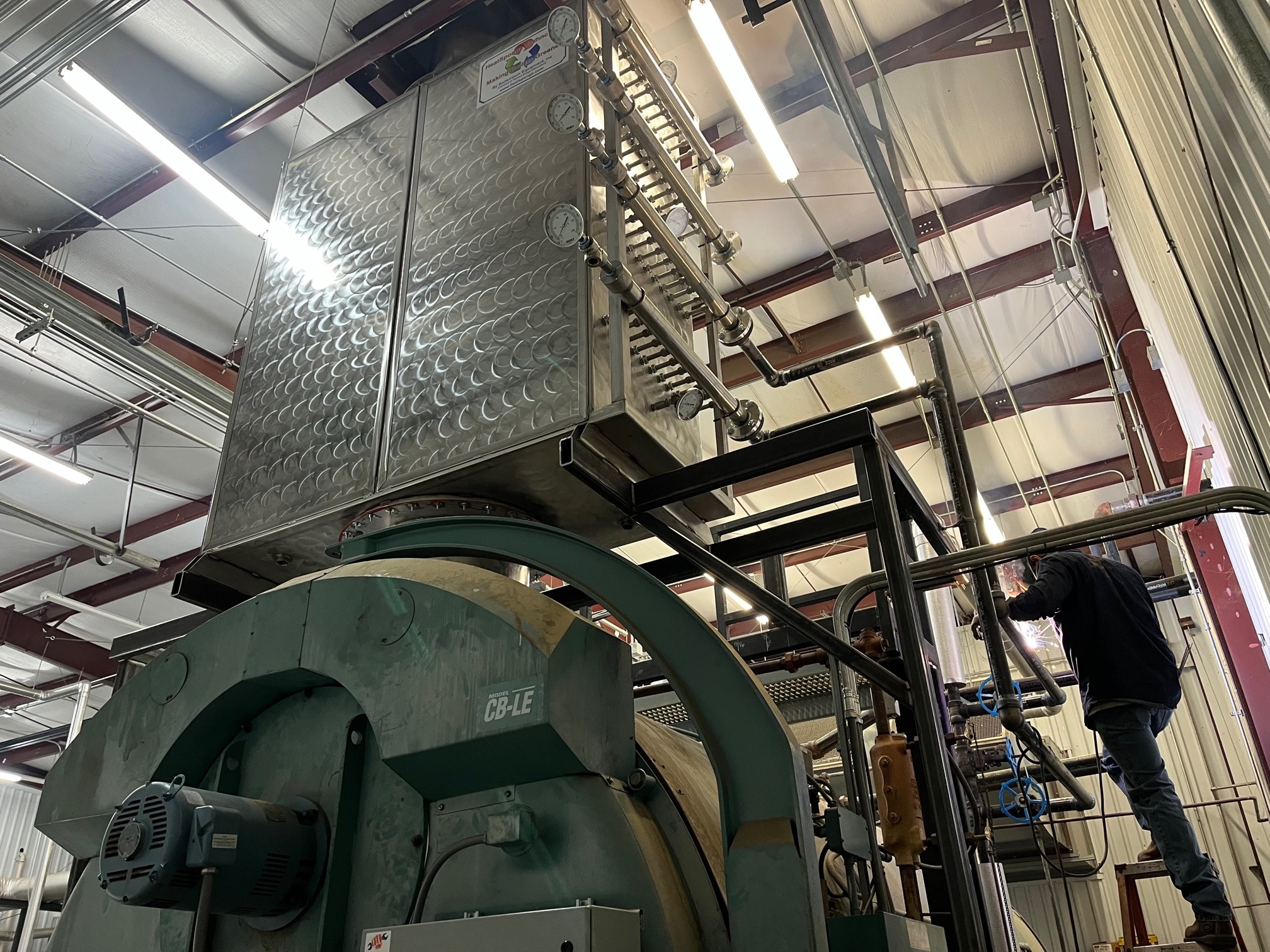
HeatSponge external economizers put the heat exchanger where it can be inspected and serviced. Replaceable tube construction and application-specific material selection address the maintenance and water-quality concerns that have historically sidelined economizers.
Where conditions support it, two-stage and Type III arrangements add condensing recovery with a separate condensate path. The right choice depends on boiler operation, feedwater quality, allowable gas-side pressure drop, available space, and the temperature of the heat sink.
Ask these five questions.
- How are tubes inspected and replaced after years in service?
- Which materials suit the actual water chemistry?
- What happens to boiler operation if the economizer needs service?
- Is there a path to a second stage or condensing operation?
- Where will condensate drain, and how is the boiler protected?